

Iris Recognition Software
Real-time iris detection for the real world.
Harness the unparalleled precision of biometric iris authentication from banking to access control.
Real-time iris detection for the real world.
Harness the unparalleled precision of biometric iris authentication from banking to access control.


TOP RANKED BY NIST
blink and you’ll miss it.
With ROC Iris, you get one of the most accurate, contactless biometric modalities on the planet – now at nearly instantaneous speeds. Together, we can reimagine what’s possible, from banking to border control.


0.1 sec

11 sec

12 sec

14 sec
ROC is 180x faster than the industry standard with an accuracy of 99.3% at a false positive ID rate of 1.0% | NIST IREX 10
ROC is 180x faster than the industry standard with an accuracy of 99.3% at a false positive ID rate of 1.0% | NIST IREX 10
ACCURACY

where accuracy is paramount.
The unique patterns in an individual’s eye, differentiated across both left and right eyes and even between identical twins, ensures top-tier accuracy in identity verification.
Unmatched accuracy
Iris recognition offers unparalleled precision due to the unique, complex patterns of the iris, which are nearly impossible to replicate or forge.
Contactless UX
Once in a lifetime
Your iris patterns remain stable and largely unchanged throughout your life, enabling long-term reliability without the need for re-enrollment.
Privacy first
Your iris data is safeguarded as a secure biometric template — a mathematical representation rather than a visual snapshot — helping protect privacy and reduce the risk of identity theft.
USE CASES
Visitor Management
Rapidly vet individuals with authoritative identity proofing through iris, face, or fingerprint biometric capture. Enroll cleared personnel into secure access systems, ensuring that only trusted individuals gain entry to critical areas.
Access Control
Enable high-assurance, frictionless access to sensitive systems and spaces using iris-based identity verification. ROC supports continuous identity assurance for authorized personnel, reducing reliance on badges or credentials while preserving the integrity of mission-critical operations.
Secure Zones
Identify unauthorized intruders in secure zones spanning airports, banks, research facilities, energy sectors, defense installations, and high-tech manufacturing. Utilize iris recognition, alongside proactive 24/7 monitoring to track movements and alert security to potential breaches within restricted areas.
Threat Detection
Identity Screening
Screen individuals against authorized access lists and watchlists using iris-based identity verification to support decision making at points of entry. Enable security teams to identify persons of interest, enforce access policies, and escalate response workflows — without relying on physical credentials.

Deployed by
DOD | DOS | US NAVY | US MARSHALS | FBI
PRODUCTS

The Future of ABIS
Supercharge your biometric
identification with the agile,
affordable, American-made ABIS.
PRODUCTS
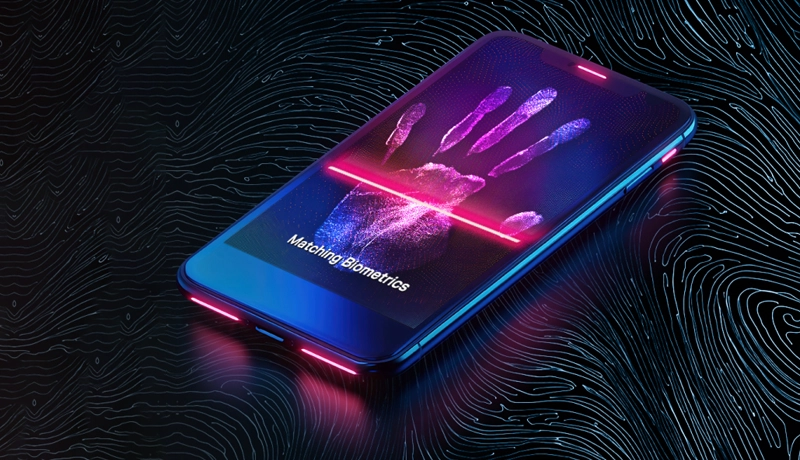

The Future of ABIS
Supercharge your biometric
identification with the agile,
affordable, American-made ABIS.


Reimagine What’s Possible
Tap into the power of the all-in-one ROC SDK. Integrate game changing biometric and Vision AI capabilities with just a few lines of code.
WHY ROC
Visionary AI
We build Vision AI into a force multiplier for defense, national security, and digital commerce to augment human capabilities and serve the greater good.
01
Fully multimodal
A gamechanging biometrics arsenal. Next-gen Vision AI, ABIS, video analytics, and more. Powered by top-tier NIST-ranked algorithms.
02
Next-gen efficiency
Speed is a financial advantage. Scalable algorithms and modular frameworks reduce costs by simplifying systems, streamlining development, and unleashing peak cloud performance.
03
Highest fidelity
Powerfully lightweight algorithms built on massive datasets for precision applications with near zero bias. Optimized for mobile and edge. Deployed with a few lines of code.
04
Easy to work with
Focus on innovation, not integration. With personalized support, flexible pricing, and cross-platform interoperability, ROC SDK has everything you need to ship with confidence.
Science-based biometrics. Forged with responsible AI.

FREQUENTLY ASKED QUESTIONS
What is iris recognition and how accurate is ROC iris recognition?
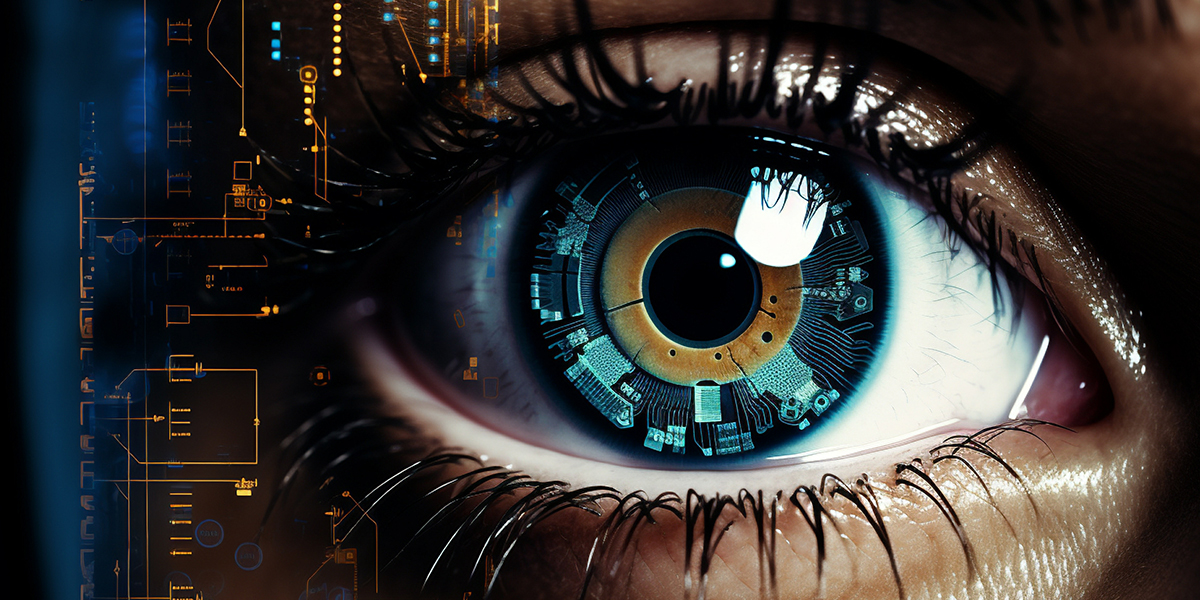
Iris recognition identifies individuals by analyzing the unique patterns of the iris – the colored ring surrounding the pupil. These patterns are unique to every person, including between identical twins and between left and right eyes.
ROC iris recognition achieves:
- 99.3% accuracy at a false positive identification rate of 1.0%
- #1 globally in speed and scalability – NIST IREX 10
These results are independently validated by NIST – not self-reported marketing data. Iris is one of the most precise biometric modalities, combining permanence (stable for life) with non-invasive contactless capture.
Source: NIST IREX 10
How fast is ROC iris recognition compared to Idemia, NEC, and Thales?
ROC is 180x faster than the industry average for iris matching - validated by NIST IREX 10:
- ROC: 0.1 seconds per match
- Idemia: 11 seconds
- NEC: 12 seconds
- Thales: 14 seconds
At a border crossing or national ID program processing millions of daily queries, this speed difference is the gap between real-time throughput and an operational bottleneck. Faster algorithms also require fewer server resources at equivalent throughput - translating directly to lower infrastructure costs.
Source: NIST IREX 10
What are the main use cases for iris recognition software?
ROC iris recognition is deployed across four primary scenarios:
- Access control - contactless, high-assurance entry to secure facilities, replacing physical badges and PINs
- Border control - real-time biometric screening alongside face and fingerprint at ports of entry
- National ID programs - enrollment and 1:N verification for ePassport, voter registration, and digital citizen identity
- Financial services - high-assurance second factor for banking and FinTech where a single biometric may not meet compliance requirements
All use cases run from the same SDK with configurable matching thresholds per security tier.
Is iris recognition contactless and what hardware does it require?
ROC iris recognition is fully contactless - users look toward a camera with no physical touch required. Key hardware facts:
- Works with standard near-infrared (NIR) cameras - no proprietary capture devices
- Compatible with existing IP camera infrastructure in many deployments
- No dedicated iris scanner hardware required for integration and testing
- Same SDK used across mobile, kiosk, and fixed-installation environments
This reduces capital costs significantly compared to legacy iris vendors that require expensive proprietary readers. For high-throughput environments, ROC iris can run on the same hardware stack as face recognition.
More: roc.ai/sdk
How does iris recognition compare to face recognition for high-security applications?
Each modality has distinct strengths - the right choice depends on the operational context:
Iris recognition:
- Higher 1:1 verification precision - iris patterns are more structurally unique than the face
- Stable for a lifetime - no re-enrollment required as a person ages
- Requires subject proximity and brief cooperation
Face recognition:
- More practical for 1:N identification at distance in video surveillance
- Captures without subject cooperation
- Better for high-throughput public spaces
ROC's recommendation: a multimodal approach - face + iris + fingerprint in ROC ABIS - for applications requiring the highest possible assurance level.
More: roc.ai/abis
How does ROC protect user privacy in iris recognition deployments?
Iris data is never stored as a raw image. ROC converts every capture into a compact mathematical template - a numerical representation that cannot be reversed into a visual image.
Privacy safeguards built into every ROC iris deployment:
- Templates only - raw captures are processed and discarded
- Encrypted in transit and at rest
- Access is policy-bound and fully auditable
- Retention periods are configurable per organizational policy
- Right-to-deletion workflows supported for GDPR compliance
More: roc.ai/code-of-ethics
Can ROC iris recognition work with glasses or contact lenses?
ROC iris algorithms are trained on real-world populations including users wearing standard prescription eyeglasses and clear contact lenses. Performance in these conditions is maintained within acceptable accuracy thresholds for most access control and identity applications.
Important considerations:
- Tinted or opaque contact lenses may obscure iris patterns and reduce matching performance
- Thick-framed glasses that partially cover the iris can lower confidence scores
- ROC's guided UX prompts users when capture quality is insufficient, requesting a recapture before submission
What industries deploy ROC iris recognition technology?
ROC iris is deployed across government, security, and financial sectors worldwide:
- Government and border control - automated biometric screening at ports of entry, alongside face and fingerprint
- Banking and FinTech - high-assurance 2FA for account access and high-value transaction authentication
- National ID programs - population-scale enrollment for ePassport, voter registration, and digital government services
- Military and classified facilities - access control where the highest assurance level is required
- Healthcare - patient identification without physical contact
How does ROC iris SDK integrate with ABIS and access control systems?
ROC iris integrates as a native modality within ROC ABIS, alongside fingerprint, face, and tattoo - enabling multimodal search in a single API call. No additional middleware or separate system required.
For physical access control:
- REST API and SDK connect to any PACS platform
- Iris enrollment syncs automatically with clearance levels and area permissions
- Badgeless entry workflows deploy within days using existing camera infrastructure
- Management dashboard provides enrollment status, audit trails, and exception handling
More: roc.ai/abis — roc.ai/watch