

Age
Estimation
Age verification system for child online
safety, digital onboarding, and age assurance.
Age
Estimation
What is Age Estimation?
Age estimation is a facial analysis capability that estimates a person’s likely age from a face image or video stream. It confirms whether a user meets an age threshold, without the need for identity documents or manual review.
This gives organizations a faster, more practical way to make age-aware decisions across digital experiences without forcing users through higher-friction identity checks.
Age estimation, also called age detection or age recognition, is useful in onboarding, child safety, and age-gated access flows. For higher-assurance use cases, ROC can pair age estimation with liveness detection and deepfake defenses to help confirm that the face presented belongs to a real, live user.
Why Age Verification &
Age Estimation Matters
Protecting Young
Users Online
Digital platforms are under growing pressure to do more to protect minors and create safer online experiences. That has made age-aware decisioning more urgent. Organizations need better ways to distinguish between adults and younger users, especially in workflows where age thresholds carry real safety, policy, or compliance implications — including those governed by COPPA, the Kids Online Safety Act, and emerging state-level age verification laws.
Reducing Friction in
Digital Workflows
At the same time, businesses do not want every user journey to begin with a high-friction document check. In many digital environments, that slows conversions, adds cost, and creates unnecessary drop-off. Age estimation gives organizations another option: a fast, frictionless way to assess likely age and route users accordingly.
Supporting Smarter
Access Decisions
Age estimation is no longer just an experimental AI feature. It is becoming an important decisioning layer for platforms, digital identity flows, and age-aware services that need to balance trust and usability with operational throughput and scale. The strongest approaches are judged by more than convenience alone. Accuracy, robustness, reliability, and fairness all matter.
How ROC Age Estimation Works
01
Estimate age from a
selfie or face image
ROC Age Estimation analyzes a live selfie or face image to estimate likely age with a high degree of precision, delivering fast, document-free biometric age verification. This gives organizations a fast way to introduce age-aware intelligence into digital workflows where speed, trust, and user experience matter.
02
Apply thresholds to match
your workflow
Estimated age on its own is only part of the story. The real value comes from how it is applied. Organizations can use ROC Age Estimation to support workflow decisions around meaningful thresholds such as 13+, 16+, or 18+, depending on the use case, policy, or risk model. This makes it possible to build challenge-age logic and route users into the right next step.
03
Choose Your
Deployment Path
Use the ROC Age Estimation API for self-service cloud integration, ROC Enroll for a ready-made browser or mobile workflow, or ROC SDK to integrate age estimation into a custom application. Each option gives your team a way to deploy ROC Age Estimation with the level of integration and control your use case requires.
04
Defend against spoofing
and deepfakes
For higher-stakes workflows, ROC pairs age estimation with single-frame passive liveness detection, certified to iBeta Level 2 for presentation attack detection, and camera injection attack detection to help defend against spoofing, deepfakes, virtual cameras, and other synthetic inputs. This is critical in environments where secure age verification and trust depends not just on estimating age, but on confirming that the face presented is from a real, live user.
Built for High-Stakes
Age-Aware Workflows
Child Safety and
Online Platforms
For platforms working to create safer online experiences, age estimation can serve as an important first layer of age verification decisioning. It helps teams identify when a user may fall near a meaningful age threshold and apply the right next step, whether that means allowing access, introducing additional safeguards, or routing into a higher-assurance identity flow. The value isn’t just speed. It’s the ability to make child-safety decisions with more intelligence and less guesswork.
Digital Identity
and Onboarding
Age estimation also plays a practical role in digital onboarding. In workflows where trust matters but every user does not need to complete a full document-based verification step, it can provide a lighter-weight signal to support smarter routing. That can help organizations reduce friction, lower abandonment, and apply stronger controls only where they are actually needed.
Age-Restricted
Digital Experiences
For services that need to manage age-gated access, age estimation offers a more modern way to support challenge-age logic. Instead of treating every user the same, organizations can use estimated age as a decision layer that helps determine when to allow a user through, when to request more information, and when to escalate into a stronger verification path. The result is a better balance of user experience, operational efficiency, and risk management.
Why ROC
Why
ROC
01
Proven in the NIST FATE Age
Estimation & Verification Evaluation
ROC’s approach is backed by benchmark-leading results. In the latest NIST FATE AEV analysis, ROC ranked as the #1 global age estimation company, including #1 in Mean Absolute Error on the Child Online Safety dataset and #1 in Mean Absolute Error on the Mugshot dataset. These results matter because they reflect performance in the conditions and edge cases that make age estimation and age verification operationally meaningful.
02
Strong at the boundary conditions that matter
Not all age estimation problems are equal. The most important ones tend to sit around real-world thresholds such as 13, 16, and 18, where policy, platform, and safety decisions become more sensitive. ROC’s emphasis on Child Online Safety is especially important because those thresholds map closely to the real decision boundaries organizations increasingly need to manage. NIST’s age estimation reports highlight age-restricted activities and online safety as key applications for the technology.
03
Consistent across
demographics
High-performing age estimation cannot just be accurate in the aggregate. It also needs to show strong consistency across different populations. ROC achieves leading performance across multiple demographic breakouts, helping reinforce that ROC’s age verification and age estimation results are not narrow or one-dimensional, but competitive across a broader range of evaluation conditions.
04
Robust under real-world
friction
Real deployments are not controlled lab environments. Users wear glasses, images are imperfect, and faces are partially occluded. ROC has demonstrated strong performance under sunglasses, while also highlighting occlusion as a real operational challenge. The result is more precise age detection and age estimates in unconstrained environments with non-ideal lighting, varied angles, and real-world friction like glasses and masks.
05
Designed to grow with
your identity stack
Age estimation may be the starting point, but it does not have to be the endpoint. ROC delivers face-based age estimation within a broader multimodal platform, giving organizations a path to expand into additional identity workflows over time — including face recognition, fingerprint recognition, and iris recognition — without rebuilding the underlying infrastructure.
Built for Real-
World Deployment
Lower-Friction User Journeys
Age estimation is valuable because it gives organizations another option between doing nothing and forcing every user through a high-friction age verification identity check. Used in the right workflow, it can support faster decisions, smoother user journeys, and more proportionate controls. That makes it especially useful in digital environments where trust matters, but so does completion rate.
Accurate, Reliable, and Fair
Any age-assurance-related capability has to be judged by more than convenience alone. Accuracy, robustness, reliability, and fairness all matter. That is why benchmark evidence matters, and why ROC’s NIST-backed performance is so important. It gives organizations a stronger foundation for evaluating age estimation and age verification as a serious operational capability.
Operationally Ready
Trust is not just about model performance. It is also about workflow design. The strongest systems are the ones that apply age estimation thoughtfully, use thresholds intentionally, and create clear escalation paths when higher assurance is needed. ROC Age Estimation is built to fit into those real-world deployment models, helping organizations operationalize age-aware decisioning in a way that is both practical and responsible.
Protected Against Spoofing
In real-world deployments, age estimation alone is not enough. ROC strengthens age assurance environments with single-frame passive liveness, iBeta Level 2 presentation attack detection, and camera injection attack detection to help defend against spoofing, deepfakes, virtual cameras, stolen media, and other synthetic inputs. This added protection is especially important in onboarding, child safety, and other sensitive workflows where systems must evaluate not just age, but whether the session itself can be trusted.
Privacy-First by Design
Age verification software that handles face images, especially in child online safety workflows, must be built around data minimization and stateless processing. ROC Age Estimation is designed to process facial images in real time and immediately discard them once an estimate is produced. This ensures that no biometric data or images are retained, stored, shared, or used for retraining without explicit consent. ROC supports fully compliant GDPR, CCPA, and COPPA-aligned deployments, with zero human review.
Choose How You
Deploy Age Estimation
Start with a self-service cloud API, add age estimation through a ready-made onboarding experience, or integrate directly with ROC SDK. Each path brings benchmark-leading age estimation into production while giving teams the level of control their workflow requires.
Start with the
ROC Age Estimation API
Go from a face image to an age estimate in one API call. Start with 100 free production requests, transparent pricing, and the flexibility to scale as your usage grows. Move from testing to deployment without a sales call.
Deploy with ROC Enroll
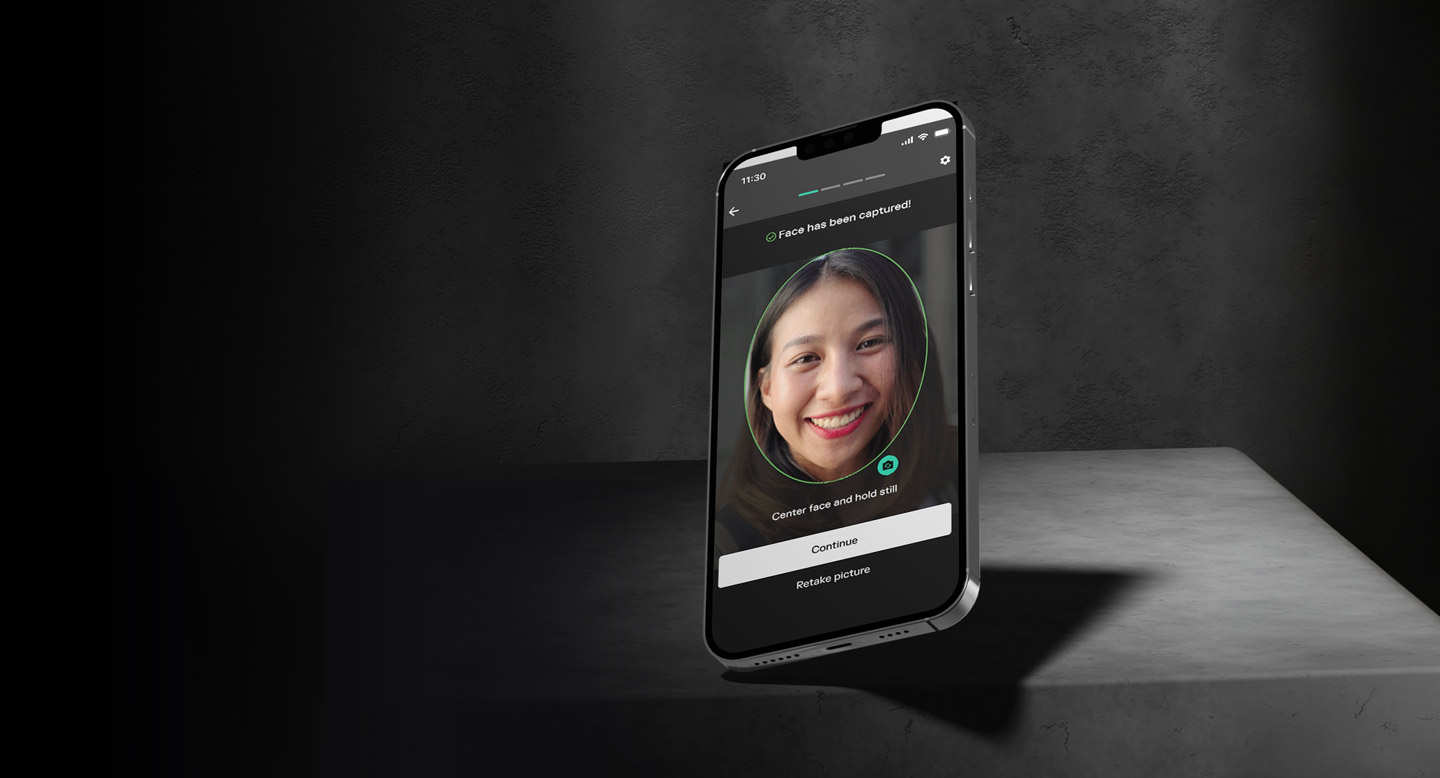
For teams that want a faster path to production, ROC Enroll combines guided face capture, age estimation, face recognition, and liveness in browser-based and mobile workflows — without requiring teams to develop every layer themselves.

Integrate with ROC SDK
For organizations that need more control, the ROC SDK provides a flexible path for integrating age estimation into custom applications and existing digital experiences. This approach is well suited to teams that want to embed ROC’s age estimation capability directly into their own workflows, business logic, or user interfaces while maintaining tighter control over the surrounding experience.

Extend Across ROC
Identity Workflows
Age estimation becomes more valuable when it is part of a broader identity and trust workflow. ROC already integrates age estimation alongside digital identity, face recognition, ID proofing, and liveness, making it easier to think about this capability not as a standalone feature, but as a practical decision layer inside a larger onboarding, trust, or safety system.




FREQUENTLY ASKED QUESTIONS
What is the difference between age
verification and age estimation?
Age verification confirms a user’s exact age through document checks or database lookups. Age estimation, — also called age detection software or age recognition software, — uses facial analysis to estimate likely age without any document. Age estimation is faster and more privacy-friendly; age verification provides higher legal certainty. Many organizations use age estimation as a first layer and escalate to full age verification only when needed.
What is the difference between age verification and age estimation?
Age verification confirms a user's exact age through document checks or database lookups. Age estimation, also called age detection software or age recognition software, uses facial analysis to estimate likely age without any document.
Age estimation is faster and more privacy-friendly; age verification provides higher legal certainty. Many organizations use age estimation as the first layer and escalate to full age verification only when needed.
What age thresholds does ROC Age Estimation support, and why do 13, 16, and 18 matter most?
- 13+ - COPPA and the Kids Online Safety Act (U.S.). Parental consent is required for users under 13.
- 16+ - EU Digital Services Act. The key threshold for data consent and content access in Europe.
- 18+ - Alcohol, tobacco, adult content, gambling, firearms. The UK Online Safety Act and Texas HB 3 (2025) both center here.
ROC ranked #1 in NIST FATE AEV on the Child Online Safety dataset - the benchmark that maps directly to the 13, 16, and 18 thresholds.
How accurate is ROC's age detection software, and how is accuracy measured?
Accuracy is measured by Mean Absolute Error (MAE) — the average gap in years between estimated and actual age. Lower is better. In NIST's independent FATE AEV evaluation, as of September 2026, ROC ranked:
- #1 global provider in MAE on the Child Online Safety dataset (ages 6-17) - the most critical benchmark for 13+ and 16+ decisions
- #1 global provider in MAE on the Mugshot dataset (adults ages 18–30) - challenging, real-world imaging conditions
- #1 global provider in MAE on the Application dataset (adults ages 18–30) — photos collected during attended interviews at U.S. immigration offices
- #1 global provider in MAE on the Visa dataset (adults ages 18–30) — visa application photos
NIST results are public, so you can review ROC's accuracy independently before you commit.
What is an age estimator, and when should I use one instead of full age verification?
An age estimator predicts likely age from a face image - no identity record, no documents. Use one when:
- Document friction would cause significant user drop-off
- Privacy-by-design is required, with no personal data beyond a face image
- Scale makes manual checks unfeasible
- Most users are clearly adults and only borderline cases need escalation
Use full document verification when regulations require confirmed identity or when the consequences of misclassification are high.
Can ROC age detection work in real-world conditions, such as glasses, low light, or partial occlusion?
- Sunglasses - strong performance in independent NIST evaluations
- Varied lighting - non-ideal conditions are standard in NIST datasets, and ROC's results reflect this
- Head pose and angle - accounted for in training and evaluation
- Partial occlusion (masks) - a real challenge industry-wide; ROC reports this transparently rather than overstating performance
Is ROC age verification software compliant with GDPR, COPPA, and U.S. state regulations?
ROC Age Estimation is built on data minimization:
- No image storage - face images are discarded immediately after processing
- No identity record - the model produces an age estimate only, not a biometric profile
- No human review - algorithm-only; no human ever sees the image
- GDPR, CCPA, and COPPA-aligned deployment configurations supported
- Texas HB 3 and U.S. state mandates - deployment options available
For specific compliance determinations, review ROC's documentation alongside qualified legal counsel.
How does ROC Age Estimation fit into a broader age verification system or digital identity workflow?
Age estimation works best as a decision layer, not a standalone gate. ROC integrates with:
- Liveness detection - iBeta Level-2 PAD and passive liveness to defend against spoofing and deepfakes
- Step-up verification - borderline users escalate to document checks, while clear adults pass with no friction
- Face recognition and ID proofing - ROC's multimodal Vision AI platform extends to fingerprint and iris recognition without rebuilding the underlying infrastructure
How do I choose the right age estimation solution for my organization?
Compare age verification companies on evidence, not claims. Four criteria separate an enterprise-grade age estimation solution from the rest:
- Independent benchmarks - NIST FATE AEV results are public and comparable across every provider that submits; self-reported accuracy is not
- Demographic consistency - accuracy must hold across populations, not just in aggregate
- Privacy architecture - no image retention and no biometric profile should be the default, not an option
- Deployment control - cloud, on-premises, or edge, depending on your data governance requirements
ROC is the #1 U.S. provider ranked by NIST and the only American-made option among the leading vendors - a factor for organizations with data sovereignty requirements.