
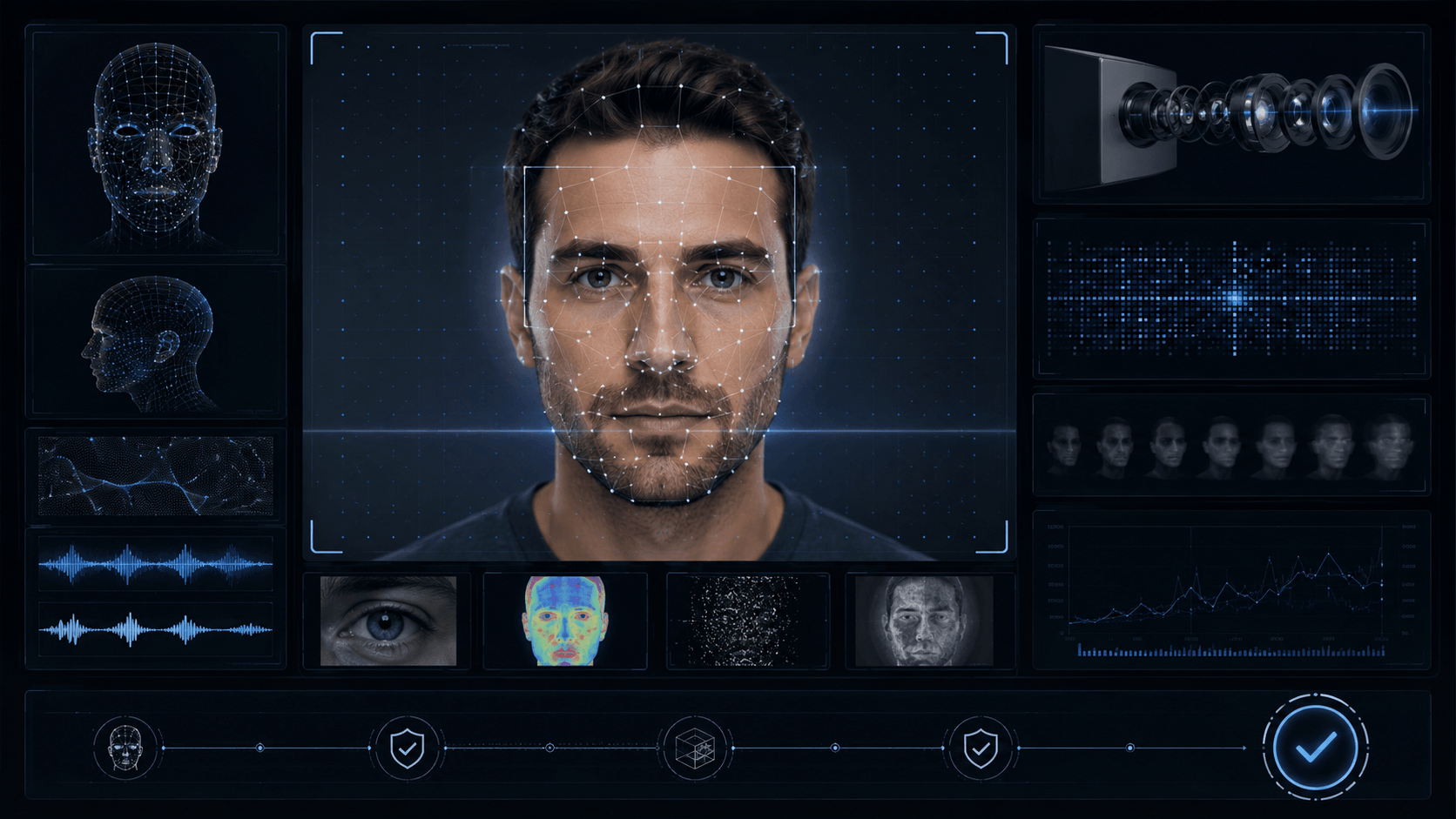


ROC debuts liveness technology for camera injection attack detection, exposing deepfakes, virtual cams, and other synthetic sources with high precision. A real-time camera forensics layer traces the digital fingerprints left by injected or synthetic media, complementing traditional liveness detection and presentation attack detection (PAD).
Why Injection Attacks Are So Elusive
ROC, a leader in American-made identity verification and liveness solutions, announced the launch of its next-generation Camera Injection Attack Detection, a capability that uses advanced camera forensics to address a new era of digital identity threats.
In recent years, deepfakes have become a serious threat to financial institutions, FinTech firms, and their customers, eroding trust and undermining the integrity of identity verification systems. As fraud evolves at an unprecedented pace, bad actors are leaning on increasingly sophisticated AI-driven models to exploit vulnerabilities in image, video, and audio processing. So-called injection attacks can bypass traditional liveness and biometric authentication checks, putting both organizations and consumers at risk.

“Powered by advances in generative AI, cybercriminals are constantly upping their game to circumvent ID verification systems, and traditional defenses can’t keep up. Injection attacks are among the most serious threats facing digital identity today. Our camera forensics technology is a powerful response to this growing challenge, offering unmatched resilience against the emerging wave of AI-driven identity fraud.”
ROC’s anti-spoofing capability draws from proprietary algorithms to detect the unique signatures of deepfakes, virtual cameras, emulated face swaps, and other synthetic inputs. By monitoring device integrity and user activity in real time, the system flags fraud signals and other anomalies with notable accuracy. It pairs natively with the ROC Identity Toolkit and the broader ROC SDK.
The Four Types of Identity Fraud Attacks
Modern identity fraud is no longer a single threat. It is a layered ecosystem of attack patterns, each requiring its own defense. Understanding the distinction is the first step to building a resilient verification stack.
| Attack Type | How It Works | Common Methods | Primary Defense |
|---|---|---|---|
| Presentation Attack | Fraudulent media presented to the camera sensor | Printed photos, screen replays, 3D masks, paper cut-outs | PAD (liveness detection) per ISO 30107-3, iBeta Level 2 |
| Injection Attack | Fraudulent data injected directly into the system, bypassing the camera | Stolen selfies, social media photos, pre-recorded videos | Camera Injection Attack Detection, device integrity checks |
| Advanced Injection Attack | Device-level compromise combined with synthetic data injection | Virtual cameras, emulators, hardware tampering, bot networks | Camera forensics, real-time anomaly detection, multi-signal fusion |
| Deepfake Attack | AI-generated synthetic face or video used to impersonate a person | GAN-generated faces, face swap apps, live deepfake tools | Deepfake detection layered with liveness and camera forensics |
- Presentation Attacks
These occur when an attacker presents falsified evidence directly to the capture device’s camera: printed photos, screenshots, masks, or replayed audio from a speaker. Presentation attacks are the oldest and most common biometric fraud vector. They are the threat that PAD (Presentation Attack Detection) was originally designed to stop. - Injection Attacks
In an injection attack, the attacker bypasses the device’s camera entirely by injecting false data directly into the system. This can include uploading stolen or synthetic formats such as images, audio, or video. These assets are easy to obtain: a selfie or video pulled from social media is often enough to launch an attack. Unlike presentation attacks, injection attacks readily pass standard liveness checks because they never present media to a real sensor. - Advanced Injection Attacks
These are an evolution of traditional injection attacks and pose a higher level of threat. Attackers not only manipulate data but also compromise the integrity of the device used for verification. Using emulators, hardware tampering, or bot networks, they alter the data source so that falsified inputs appear trustworthy at every layer of inspection. - Deepfake Attacks
Deepfakes combine synthetic media generation with one or more of the methods above. A face swap model produces a convincing impersonation of a real person, which is then either presented to a camera (presentation deepfake) or injected directly into the verification flow (injection deepfake). Modern live deepfake tools can generate convincing video from a small number of reference images, making this attack vector scalable for fraud-as-a-service operations.
Understanding Camera Injection Attacks
01
Injection attacks insert false biometric data, such as internet-sourced imagery or deepfake video, directly into a biometric system rather than presenting it live at the sensor level.
02
By bypassing the physical sensor, these attacks exploit vulnerabilities in PAD algorithms by injecting fraudulent data at the software level, deceiving biometric systems into accepting fraudulent users.
03
Unlike presentation attacks, injection attacks are more successful in many environments because they readily pass standard liveness checks, allowing stolen or synthetic imagery to be inserted directly into the identity verification process.
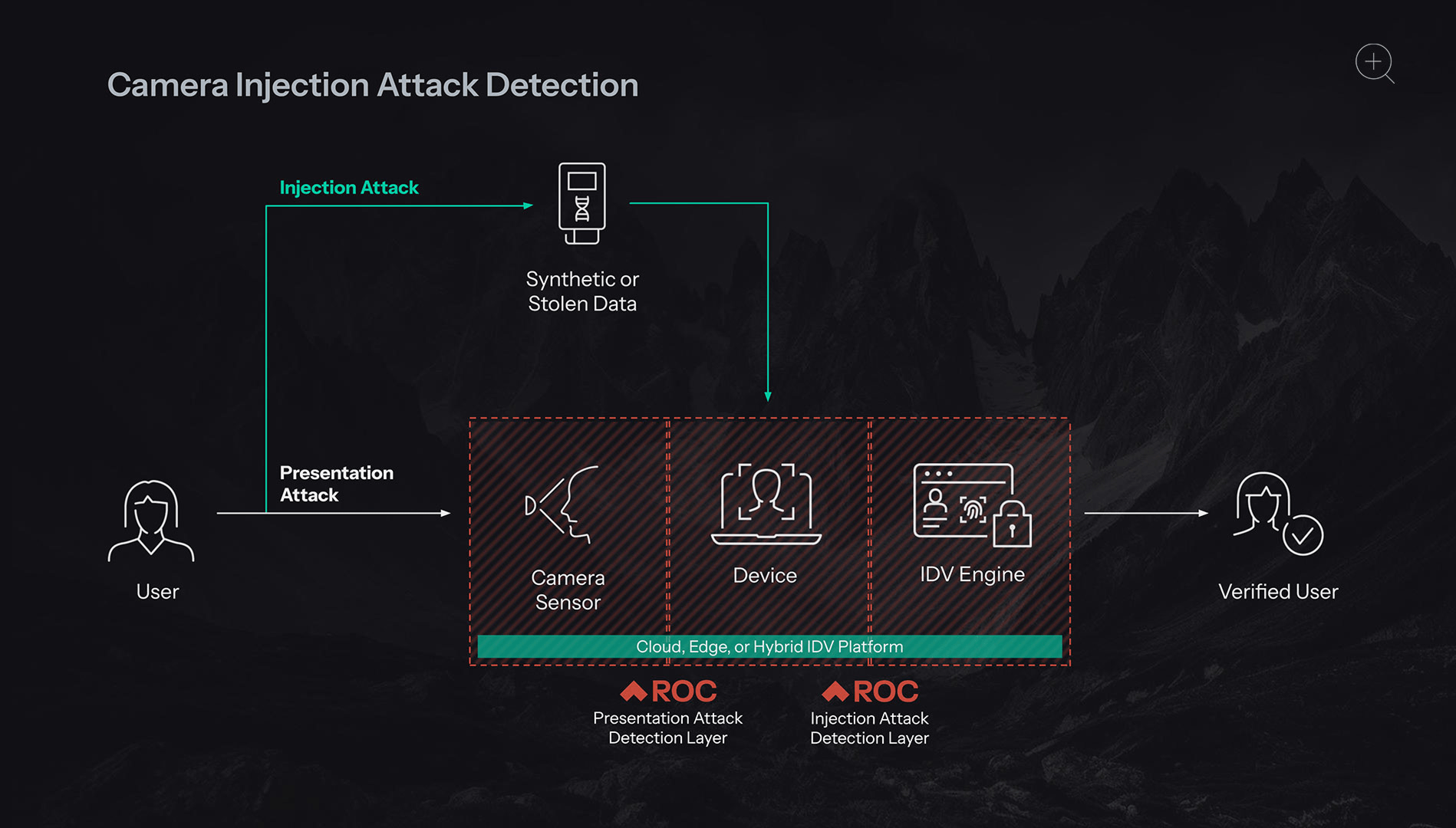
“Due to their complexity, injection attacks are less common than presentation attacks. But this worldview is changing fast. Because they can use stolen imagery while bypassing the presentation attack process, they pose a more insidious and systemic risk of undermining the entire identity verification process. ROC’s Camera Injection Attack Detection is purpose-built to combat today’s most creative and advanced identity fraud techniques. Think of it as a tripwire for stolen or synthetic inputs.”
How Liveness Detection Works
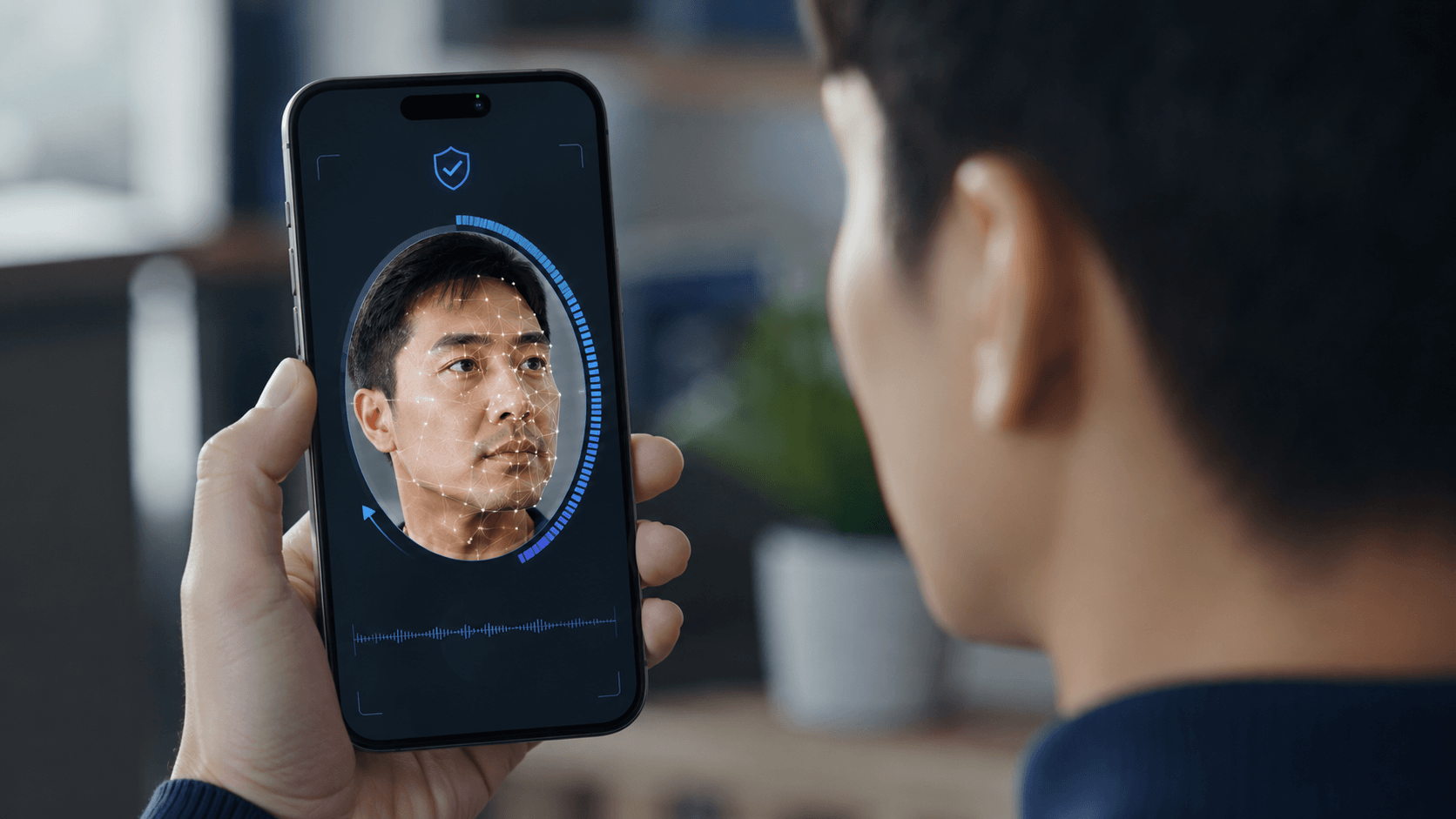
Liveness detection is the set of techniques that confirm a biometric capture is coming from a physically present, live person rather than a spoof artifact. It is the foundational defense layer in any modern identity verification stack.
Liveness systems analyze biometric input for signals that distinguish a genuine human from a synthetic, recorded, or printed substitute. These signals include skin texture and micro-detail, depth and 3D geometry, light reflection in the eyes and on facial surfaces, involuntary micro-movements, and frequency-domain artifacts that betray synthetic generation.
Critically, liveness detection alone is not a complete answer to modern fraud. ISO/IEC 30107-3 explicitly excludes digital injection attacks from the scope of presentation attack detection. This is why ROC layers liveness detection with Camera Injection Attack Detection, face analytics, and face recognition in a single multimodal stack.
Passive Liveness vs Active Liveness Detection
Liveness detection comes in two primary forms. Choosing between them is one of the most consequential design decisions in any identity verification flow.
| Criterion | Passive Liveness | Active Liveness |
|---|---|---|
| User Interaction | None – runs silently in the background | User must blink, smile, turn their head, or follow prompts |
| User Experience | Frictionless, single-frame, near-instant | Slower, may interrupt onboarding flow |
| Capture Method | Single image or short video, no prompts | Multiple frames during prompted action |
| Spoof Detection | Analyzes skin texture, depth, light reflection, and micro-movements | Detects motion patterns and challenge response |
| Vulnerability to Deepfakes | Strong – hard to fake involuntary signals | Moderate – modern deepfakes can simulate movements |
| Best Use Case | High-volume remote onboarding, mobile eKYC | Step-up verification, high-risk transactions |
ROC’s single-frame passive liveness is engineered for the high-volume, low-friction onboarding flows that define modern FinTech and digital identity. It runs in real time on a single captured frame, eliminating the cognitive load of active challenges while still defending against the full presentation attack surface defined by ISO 30107-3.
Deepfakes: The New Face of Fraud

2023 was the first year that deepfakes became a widespread attack vector, posing a significant threat to consumers and businesses worldwide. In 2024, injection attacks surged 9x, fueled by a 28x spike in virtual camera exploits (iProov Threat Intelligence Report 2025). Subsequent industry reporting has tracked sustained acceleration: deepfake injection attempts have continued to climb through 2025 and into 2026 as generative tooling becomes cheaper and more accessible.
ROC’s Camera Injection Attack Detection pairs seamlessly with the ROC Identity Toolkit, which includes face recognition, single-frame passive liveness, age estimation, and face analytics, to deliver a complete biometric verification platform. The result: reduced attack surface, smarter safeguards, and trusted access for verified users only. The same stack supports remote eKYC onboarding and broader digital identity programs.
Beyond NIST: Liveness and the New Identity Threatscape
Different testing standards cover different threat surfaces. Buyers evaluating liveness providers should understand the boundaries of each.
| Standard / Test | What It Covers | Coverage Gap |
|---|---|---|
| NIST FRVT | Face recognition accuracy and demographic differentials | Does not assess resilience against deepfakes or camera injection attacks |
| ISO/IEC 30107-3 | Presentation attack detection (physical spoofing at the sensor) | Explicitly excludes digital injection attacks from the scope |
| iBeta Level 1 PAD | Basic presentation attack resistance (printed photos, basic masks) | Does not cover injection attacks or advanced synthetic media |
| iBeta Level 2 PAD | Advanced presentation attacks: high-quality video, 3D masks, prosthetics, makeup | Limited coverage for camera injection attacks |
NIST evaluations remain the gold standard for measuring biometric face recognition accuracy and demographic differentials, but they do not assess resilience against deepfakes or camera injection attacks. To ensure full-spectrum Presentation Attack Detection (PAD), identity leaders should prioritize providers who hold iBeta Level 2 PAD certification, an ISO/IEC 30107-3 standard. This is the leading third-party validation for systems that can withstand advanced presentation attacks, including high-quality video, 3D masks, prosthetics, makeup, and impersonation.
However, iBeta testing currently offers limited coverage for camera injection attacks, which involve bypassing the camera input entirely and feeding fake data directly into the system. This gap is exactly what ROC’s Camera Injection Attack Detection is engineered to close. Read more about how ROC approaches independent evaluation in Testing and Standards, and how those commitments are codified in our Code of Ethics.
Building a Multimodal Defense
No single defense is sufficient against the modern fraud surface. The strongest identity verification stacks layer liveness detection (against presentation attacks), Camera Injection Attack Detection (against synthetic and injected inputs), face recognition (for identity binding), and where appropriate, complementary modalities like fingerprint and iris recognition for the highest assurance flows.
For a deeper look at how face recognition fits into this multimodal picture, including its strengths and remaining limits, see our companion guide: The Pros and Cons of Facial Recognition.
Future-ready insights.
Straight from the source.
Subscribe for Vision AI insights, product updates, and stories from the front lines of identity and intelligence.