


For years, I have argued that America needs greater control over the technology powering its identity, security, and justice infrastructure. ROC’s recent federal ABIS award and DOJ digital evidence contract show that conviction beginning to translate into buying decisions. Agencies are putting real missions and real dollars behind American-built platforms, strengthening the foundation for our technological independence.
American AI Is Earning Its Place in Federal Infrastructure
After September 11, the United States moved quickly to strengthen identity screening and security. Foreign-developed biometric technology helped meet urgent needs at a time when domestic alternatives were lacking. These decisions served immediate missions, but they also created long-term dependencies that carried forward through successive procurement cycles. Once a platform becomes embedded in a national system, changing it is difficult. Workflows, integrations, training, and institutional knowledge calcify around it. Keeping the incumbent can become the path of least resistance, even as alternatives advance.
Other nations are already acting on this principle. France’s national AI strategy, backed by France 2030, explicitly prioritizes technological sovereignty. Spain is pursuing the same ambition through its national AI strategy and its new IA360 plan, strengthening domestic capabilities and control over critical data infrastructure. America’s procurement decisions should reflect the same commitment to securing our technological future.
Today, America also has a choice. American-built platforms can compete for our nation’s most consequential missions, and federal buyers are beginning to put that capability to work.
Two Awards Make the Shift Tangible
In August, ROC secured a competitively awarded contract to provide ROC ABIS to a major federal national security program. The award has a potential value of $5.1 million over five years, including options, with $2.5 million in committed revenue. It covers our multimodal biometric identification platform, implementation services, and ongoing support.
A sophisticated federal customer evaluated the market and selected ROC for a critical operational environment. That decision demonstrates an American-built ABIS platform’s ability to compete for missions long served by established providers.
In September, the Department of Justice selected ROC Evidence to support its Digital Evidence Review Platform program. The contract has a potential value of $64.3 million over eight years, including options, with approximately $7 million committed for the base year. The work supports the ingestion, review, analysis, and production of digital evidence, including cellphone and social media content, for federal prosecutions.
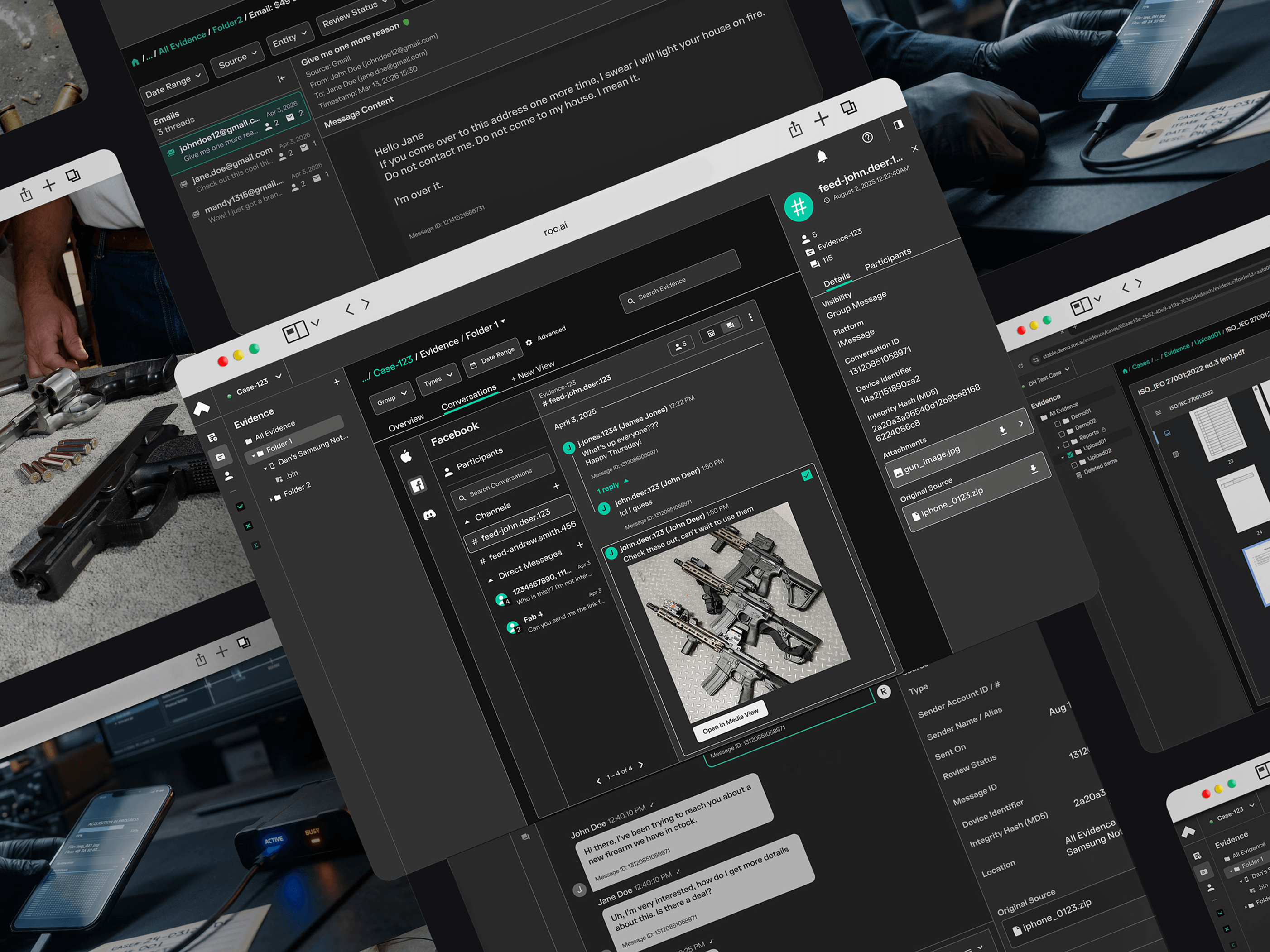
The DOJ’s selection places ROC at the heart of another consequential federal workflow: turning complex digital evidence into material that supports the pursuit of justice. It demonstrates trust in our ability to deliver and support an American-made digital evidence platform at operational scale.
The case for sovereign AI is becoming reality. Across two distinct missions, from biometric identification to digital evidence, federal customers are placing their trust in ROC’s American-built platforms for work that demands accuracy, scale, and accountability. I see these awards as evidence of a meaningful shift in federal buying decisions.
Every Procurement Decision Builds Our Future
The significance reaches beyond ROC. When agencies invest in capable American technology, they help sustain the engineers, researchers, and operational expertise needed to build the next generation of systems. Federal deployments give domestic providers experience at scale. This experience informs better technology, strengthens delivery capabilities, and creates a deeper foundation for future missions.
Over time, these benefits compound. America gains more than a product. It gains the capacity to develop, support, and improve the infrastructure it depends on. That is how technological independence becomes durable.
We need American institutions capable of carrying innovation from research into operations and sustaining it through years of evolving and challenging mission requirements. Federal procurement can help build that capacity by giving proven domestic alternatives a fair opportunity to compete. The companies earning these opportunities must then demonstrate why that investment was worthwhile.
Now We Have to Deliver
ROC’s federal ABIS and digital evidence awards carry an immense responsibility: federal agencies have entrusted ROC with work that matters to national security and justice. The people relying on these systems need proven performance, dependable support, and technology that keeps pace with their missions.
For ROC, that means staying close to our customers’ missions, bringing the same discipline to implementation and support that we bring to research and engineering, and remaining accountable long after the contract is inked.
For years, I have argued that the U.S. can build the technology its most consequential missions require. These contracts put that conviction into practice. Our focus is clear: help secure America’s future with technology built and trusted here, and ready for the challenges ahead.
Future-ready insights.
Straight from the source.
Subscribe for Vision AI insights, product updates, and stories from the front lines of identity and intelligence.